Architectural Story
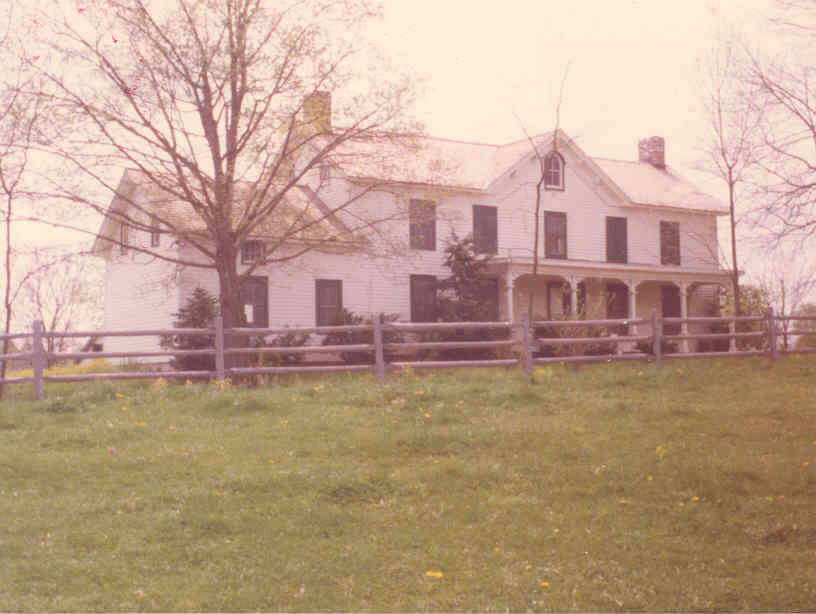
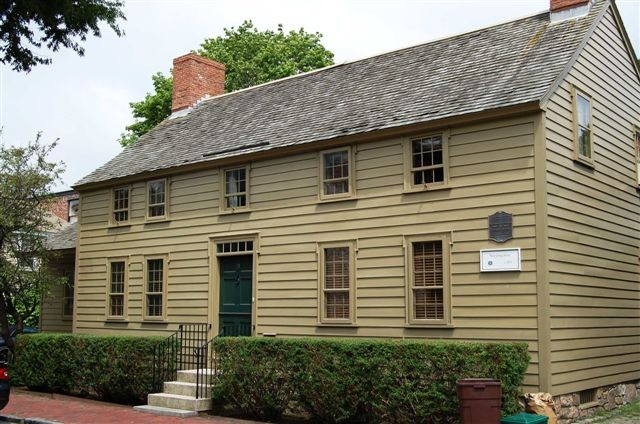
72 Spring Street, built ca. 1800, is a one-and-a-half-story building with a gable roof and two end chimneys. The house originally stood in Somerville, New Jersey where the Duke family estate, Duke Farms, is located. It was purchased by NRF in 1974, then dismantled and trucked to Newport where it was stored until a building site could be located. Once the current site was found and the building moved, the house was reconstructed and restored in 1976-77.
Next Tab
Restoration Story
When NRF bought the house in 1974, several houses and barns in the Somerville, NJ area were slated for demolition. Doris Duke wanted to salvage materials, particularly framing timbers, to be used for restoration projects in Newport. This particular house was in good condition and had early framing and interior fabric. The house was measured, disassembled, and the pieces relocated to Newport for storage.
The following year, the Redevelopment Agency of Newport took over a deteriorating brick apartment building on Spring Street. The fifth floor was removed from the building after a destructive fire, and the building was eventually abandoned.
The Agency took over both the apartment building at 72 Spring Street, along with 74 Spring Street (the Buffum-Redwood House). NRF then applied to the Redevelopment Agency to be the preferred developer for both of these properties, planning to reassemble the New Jersey house on the cleared property at #72 and restore the house at #74. Once the application was approved, the land was transferred to NRF in 1975, and reconstruction of the New Jersey House on the site began in 1976.
Beyond bricks: Masonry 2025
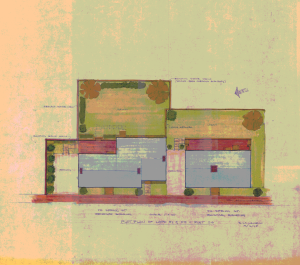
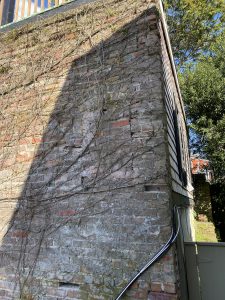
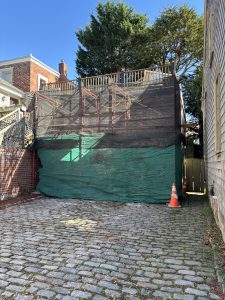
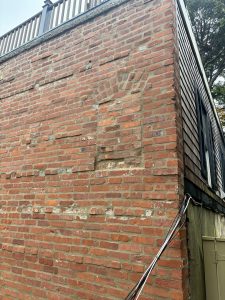
Archival site drawings from the 1976 restoration of 72 Spring Street revealed the property repurposed walls from an earlier structure. The Joseph Mayer building, a 5-story brick apartment complex, had been demolished in 1974. Photographs of a brick first floor with arched windows match the ghosts of window openings still seen on the brick wall left behind. Due to the unique presence of this ghost relic and its structural support to surrounding properties, NRF chose to repair rather than remove the wall. Repairs included removal of climbing vines, cleaning of masonry, and a full repointing.
People Story
We are looking forward to uncovering more about the people who lived and worked in the house.
Next Tab